

Digital government transformation represents a fundamental shift in how public institutions deliver services to citizens, moving from traditional bureaucratic processes to streamlined, technology-enabled experiences. At the heart of this transformation lies the integration of intelligent automation solutions that bridge the gap between digital infrastructure and human-centered service delivery. Among these innovations, the service hall robot has emerged as a critical catalyst for accelerating modernization efforts in government facilities worldwide. These autonomous systems are redefining citizen engagement by providing consistent, efficient, and accessible services across diverse government touchpoints, from municipal offices to national administrative centers.
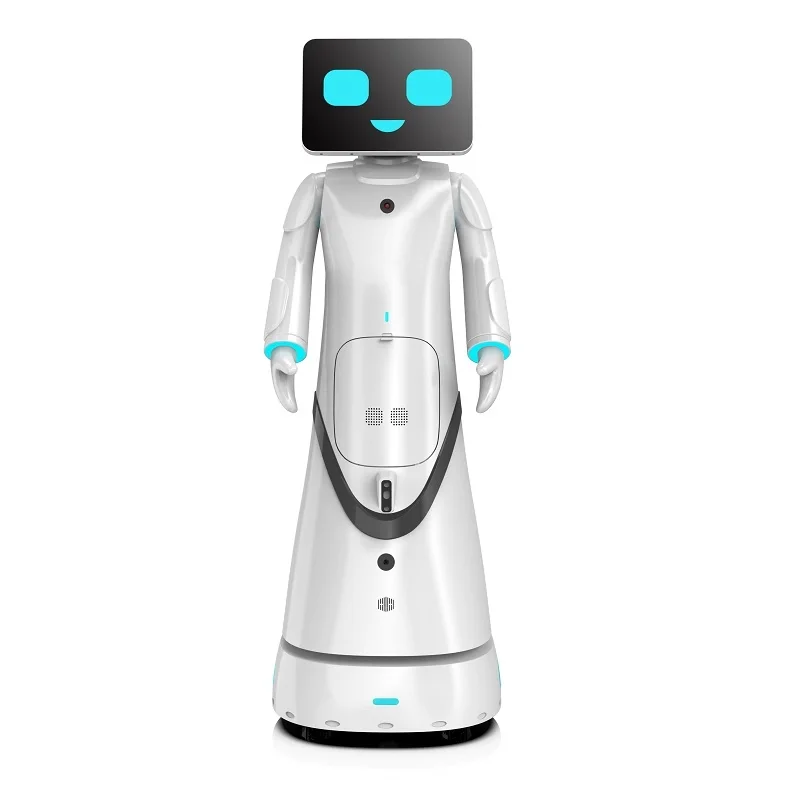
The strategic deployment of service hall robots within government environments addresses multiple dimensions of digital transformation simultaneously. These intelligent platforms enhance operational efficiency, reduce wait times, improve data collection accuracy, and create more inclusive access pathways for citizens with varying levels of digital literacy. Beyond mere automation, service hall robots serve as physical manifestations of government commitment to modernization, demonstrating tangible progress in service innovation. Their role extends from routine information dissemination and wayfinding to complex process navigation and multi-language support, making them indispensable tools for agencies seeking to achieve meaningful digital government objectives while maintaining the human touch essential for public trust.
Transforming Citizen Experience Through Intelligent Reception
Eliminating Service Bottlenecks in High-Traffic Environments
Government service halls traditionally face significant challenges during peak hours, with limited staff resources struggling to manage large volumes of citizen inquiries simultaneously. The introduction of a service hall robot fundamentally alters this dynamic by providing scalable reception capacity that adapts to demand fluctuations without compromising service quality. These robotic systems can simultaneously manage multiple interaction streams through queuing intelligence, directing visitors to appropriate service windows based on real-time availability data. This capability dramatically reduces congestion at central information desks, allowing human staff to focus on complex cases requiring nuanced judgment rather than repetitive directional queries.
The operational impact becomes particularly evident in large government complexes where navigation confusion frequently causes delays and frustration. A properly deployed service hall robot serves as an always-available guide, providing instant location information, procedural explanations, and document requirement details without fatigue or inconsistency. This consistent availability ensures that every citizen receives standardized information regardless of when they arrive, eliminating the service quality variations that often occur during shift changes or staff absences. The robots maintain updated databases synchronized with backend systems, ensuring that information provided remains current and accurate even as policies or procedures evolve.
Enhancing Accessibility for Diverse Citizen Demographics
Digital government transformation must prioritize inclusivity to succeed, yet many digital-first initiatives inadvertently create barriers for elderly citizens, individuals with disabilities, or populations with limited technological exposure. The service hall robot addresses this challenge by offering intuitive physical interfaces that complement rather than replace traditional service channels. Touchscreen interactions combined with voice recognition capabilities enable citizens to engage through their preferred modality, while visual displays accommodate varying literacy levels through icon-based navigation systems. This multi-modal approach ensures that technology enhancement does not exclude vulnerable populations from accessing essential government services.
Language barriers represent another critical accessibility challenge in increasingly diverse societies. Advanced service hall robots integrate real-time translation capabilities supporting multiple languages, enabling immigrants and linguistic minorities to navigate government processes without requiring human interpreters for basic inquiries. This feature proves particularly valuable in metropolitan areas with significant multilingual populations, where language support demands often strain limited bilingual staff resources. By automating routine multilingual interactions, these systems free human resources for situations requiring cultural sensitivity and complex communication, while ensuring that language never prevents citizens from understanding available services or required procedures.
Building Digital Confidence Through Graduated Technology Exposure
A frequently overlooked aspect of digital transformation involves preparing citizens for increasingly digital service delivery models. The service hall robot functions as a low-risk introduction to automated systems, allowing citizens to experience technology-mediated service in a physical environment where human assistance remains immediately available if needed. This graduated exposure builds digital confidence among populations hesitant about online portals or mobile applications, demonstrating that automated systems can be approachable, helpful, and trustworthy. Over time, positive experiences with service hall robots reduce resistance to broader digital government initiatives, creating psychological readiness for more comprehensive digital engagement.
The physical presence of robotic systems in government facilities also serves an important symbolic function, signaling institutional commitment to modernization while maintaining tangible service access points. Citizens who might distrust purely digital channels often find comfort in interacting with visible technology within familiar government spaces, perceiving these systems as extensions of existing service infrastructure rather than replacements. This perception management proves crucial for change management strategies, as public acceptance determines the ultimate success or failure of digital transformation initiatives regardless of technical capabilities.
Operational Efficiency and Resource Optimization
Redeploying Human Capital to Higher-Value Functions
Government agencies consistently face pressure to deliver improved services within constrained budgets, creating tension between service quality expectations and resource limitations. The strategic integration of a service hall robot addresses this challenge by automating routine, repetitive tasks that consume disproportionate staff time relative to their complexity. Reception duties, directional assistance, and basic information provision typically occupy significant portions of frontline staff schedules despite requiring minimal specialized knowledge. By delegating these functions to robotic systems, agencies can redirect valuable human expertise toward complex case resolution, personalized citizen assistance, and service innovation initiatives that genuinely require human judgment and empathy.
This resource reallocation generates measurable productivity gains that extend beyond simple time savings. Staff members freed from repetitive inquiry management report higher job satisfaction, reduced burnout rates, and greater professional fulfillment as their roles shift toward meaningful problem-solving activities. These morale improvements translate into better citizen outcomes through more engaged, attentive service during complex interactions that truly benefit from human intervention. Additionally, the service hall robot maintains consistent performance throughout operating hours without breaks, shift changes, or productivity variations, ensuring baseline service availability that supplements rather than replaces human capacity during demand surges or unexpected absences.
Data Collection and Service Improvement Insights
Digital transformation fundamentally depends on data-driven decision making, yet traditional government service delivery often lacks systematic mechanisms for capturing citizen interaction patterns and service pain points. Every interaction with a service hall robot generates structured data regarding inquiry types, service window traffic patterns, common confusion points, and process completion rates. This continuous data stream provides agency leadership with unprecedented visibility into actual citizen experiences rather than relying on periodic surveys or anecdotal staff reports. Analytics derived from robotic system logs reveal which services generate the most questions, which procedures cause the greatest confusion, and where process improvements would yield the highest citizen satisfaction gains.
The longitudinal data accumulation enables sophisticated trend analysis that informs strategic planning for both physical and digital service channels. Seasonal patterns in specific inquiry types can guide staffing decisions and resource allocation, while geographic analysis of citizen origins helps optimize satellite office locations. Furthermore, the service hall robot can function as a testing platform for new service explanations or procedural changes, with A/B testing capabilities that allow agencies to refine communication approaches based on empirical effectiveness data before implementing broader changes. This evidence-based approach to service design represents a fundamental shift from assumption-driven planning to citizen-validated optimization.
Cost-Effectiveness Over Extended Deployment Horizons
While initial investment in service hall robot technology requires capital allocation, the total cost of ownership analysis consistently favors automation for routine service functions over multi-year periods. Human staffing costs include not only salaries but also benefits, training expenses, turnover replacement costs, and facility overhead for break rooms and administrative space. A service hall robot incurs primarily maintenance expenses and periodic software updates after initial deployment, with operational costs remaining relatively stable regardless of interaction volumes. For high-traffic government facilities managing thousands of daily visitors, the per-interaction cost differential becomes substantial, enabling budget reallocation toward service expansion or quality enhancement initiatives.
The scalability economics prove particularly compelling for governments managing multiple service locations across jurisdictions. Standardized service hall robot deployments ensure consistent service quality across all facilities regardless of local staffing challenges or geographic remoteness. Software updates propagate simultaneously across the entire fleet, ensuring policy changes or procedural updates reach all locations instantly without requiring individual site visits or staff training sessions. This centralized management capability reduces administrative overhead while guaranteeing service consistency that would prove impossible to maintain through purely human delivery networks spanning diverse locations with varying resource levels.
Accelerating Digital Infrastructure Integration
Bridging Physical and Digital Service Ecosystems
Successful digital government transformation requires seamless integration between online platforms and physical service locations, yet many agencies struggle to create coherent omnichannel experiences. The service hall robot serves as a critical bridge between these domains, functioning as a physical interface to digital systems within traditional service environments. Citizens can initiate online applications, check processing status, or schedule appointments through robotic interfaces without requiring personal devices or pre-existing digital accounts. This capability proves essential for populations lacking reliable internet access or appropriate devices, ensuring that digital service benefits remain accessible regardless of individual technology ownership.
The integration extends beyond simple terminal functionality to include intelligent routing that optimizes citizen journeys across channels. When a service hall robot determines that a citizen's needs would be better served through an online portal for efficiency reasons, the system can facilitate immediate digital onboarding, providing temporary credentials or guided tutorials that reduce digital service adoption friction. Conversely, when digital transactions encounter problems requiring human intervention, the robotic system can seamlessly transition citizens to appropriate staff members with full context transfer, eliminating frustrating repetition of information. This fluid channel switching creates genuinely integrated experiences rather than disconnected touchpoints that force citizens to navigate organizational silos.
Real-Time System Integration and Process Automation
Modern service hall robots connect directly to backend government information systems, enabling real-time data access that transforms service delivery capabilities. Rather than providing generic information, these systems can offer personalized status updates, appointment confirmations, or document requirement specifications based on actual citizen records and application states. This integration eliminates the information delays inherent in traditional service models where staff must manually query multiple systems to answer specific questions. Citizens receive immediate, accurate responses without wait times, while system integrations automatically log interactions for audit trails and performance monitoring.
The automation potential extends to document handling and verification processes that traditionally require significant staff time. Advanced service hall robot platforms incorporate scanning capabilities that allow citizens to submit documents directly through robotic interfaces, with automated validation checking for completeness and format compliance before submission. This preliminary verification reduces processing errors and resubmission requirements that frustrate citizens and waste administrative resources. Furthermore, the systems can print confirmations, generate reference numbers, or provide next-step instructions immediately upon successful submission, creating clear process visibility that reduces follow-up inquiries and improves citizen confidence in government responsiveness.
Supporting Continuous Innovation Through Modular Capabilities
Digital transformation represents an ongoing journey rather than a single destination, requiring technology infrastructure that adapts to evolving needs and emerging capabilities. Service hall robot platforms built on modular architectures support continuous enhancement without requiring complete system replacements. New features such as biometric authentication, advanced AI conversational capabilities, or integration with emerging government platforms can be added through software updates and peripheral additions. This extensibility protects initial investments while ensuring that service capabilities keep pace with both technological advancement and changing citizen expectations.
The platform approach also enables experimentation with innovative service models before committing to large-scale implementation. Agencies can pilot new self-service processes through service hall robot interfaces in controlled environments, gathering usage data and citizen feedback that inform refinement before broader rollout. This iterative development approach reduces implementation risks while accelerating innovation cycles. As successful pilots demonstrate value, the centralized software management allows rapid scaling across facilities, compressing innovation diffusion timelines from years to months and positioning early-adopting governments as service delivery leaders.
Building Public Trust Through Transparent Automation
Maintaining Human Oversight and Accountability
Public sector automation initiatives frequently encounter skepticism regarding transparency, accountability, and the potential for impersonal service delivery that disregards individual circumstances. The implementation of service hall robots within government contexts must address these concerns through careful design that maintains clear human oversight and intervention pathways. Effective deployments position robotic systems as first-line assistants that handle routine matters efficiently while maintaining obvious escalation routes to human staff for complex situations, complaints, or cases requiring discretionary judgment. This hybrid model reassures citizens that technology enhances rather than replaces human accountability in government operations.
Transparency mechanisms built into service hall robot operations prove equally important for public trust. Systems should clearly identify themselves as automated assistants rather than attempting to simulate human interaction, avoiding deceptive practices that erode confidence when revealed. Interaction logs that citizens can request promote accountability, while clear explanations of how systems use personal information address privacy concerns. When service hall robots incorporate AI decision-support capabilities, agencies must ensure that recommendation logic remains explainable and aligned with published policies, avoiding black-box processes that could hide bias or inconsistency. This commitment to operational transparency distinguishes trustworthy government automation from commercial applications where profit motives may conflict with public interest.
Ensuring Equitable Service Delivery Standards
Digital transformation initiatives risk exacerbating existing service inequities if deployment strategies favor affluent urban centers while neglecting rural or underserved communities. The service hall robot deployment framework should explicitly address equity considerations, ensuring that automation benefits extend broadly rather than concentrating in already well-resourced locations. Standardized systems enable consistent service quality across diverse facilities, preventing the service gaps that often emerge when resource-constrained locations cannot match staffing levels or training investments available in flagship offices. This democratization of service excellence represents a core value proposition for public sector automation distinct from private sector applications.
Equity considerations also encompass interface design and interaction modalities that accommodate diverse abilities and preferences. Service hall robot systems should meet accessibility standards for wheelchair users, provide audio alternatives for visually impaired citizens, and offer simplified interfaces for individuals with cognitive differences. Regular usability testing with diverse user groups helps identify and address barriers that might not be apparent to designers. By prioritizing universal design principles, agencies ensure that automation truly serves all citizens rather than creating new exclusions that undermine digital transformation objectives and public trust in government modernization efforts.
Managing Change Communication and Public Perception
The visible introduction of service hall robots into government facilities creates both opportunities and risks for public perception of digital transformation initiatives. Effective change communication strategies position these systems as service enhancements that expand capacity and convenience rather than cost-cutting measures that reduce employment or human interaction. Messaging should emphasize citizen benefits including reduced wait times, extended service hours, and improved information accuracy while acknowledging that human assistance remains available for those who prefer or require it. Transparent discussion of implementation rationales builds understanding and acceptance more effectively than attempting to minimize the significance of operational changes.
Ongoing feedback mechanisms allow citizens to shape service hall robot evolution based on actual usage experiences rather than designer assumptions. Prominent feedback collection interfaces on the robots themselves, combined with periodic citizen surveys, demonstrate genuine commitment to user-centered design. When feedback drives visible improvements or feature additions, agencies should publicize these responsive changes to reinforce that automation serves citizen needs rather than institutional convenience. This participatory approach to technology deployment builds ownership and acceptance while generating valuable insights that improve system effectiveness. Success stories from early adopters provide powerful testimonials that reduce skepticism and encourage broader utilization across diverse population segments.
Strategic Implementation for Maximum Impact
Conducting Thorough Needs Assessment and Process Mapping
Successful service hall robot deployment begins with comprehensive analysis of existing service delivery patterns, citizen needs, and operational pain points. Agencies should systematically document current information request types, volume patterns, seasonal variations, and common citizen confusion areas through direct observation, staff interviews, and existing complaint data. This baseline assessment identifies which functions offer the greatest automation potential while revealing constraints or special circumstances that require human judgment. Process mapping exercises that trace complete citizen journeys from entry through service completion expose bottlenecks, redundancies, and opportunities for robotic intervention that optimize overall system performance rather than merely automating isolated tasks.
The needs assessment must also consider facility-specific factors including physical layout, traffic flow patterns, acoustic conditions, and technological infrastructure readiness. Service hall robot effectiveness depends heavily on appropriate positioning that maximizes visibility and accessibility while avoiding congestion points or areas with poor network connectivity. Consultation with frontline staff who possess deep operational knowledge ensures that implementation plans address practical realities rather than idealized scenarios. This collaborative planning approach also builds staff buy-in by involving them as implementation partners rather than passive recipients of imposed change, reducing resistance that could undermine deployment success.
Developing Comprehensive Training and Support Systems
While service hall robots reduce certain staffing demands, successful implementation requires investment in staff training that enables effective collaboration between human and robotic team members. Personnel must understand system capabilities and limitations, appropriate escalation triggers, and techniques for assisting citizens who experience difficulty with robotic interfaces. Training programs should address both technical operation and the philosophical shift toward hybrid service models where technology and human expertise complement each other. Staff confidence in managing the new service ecosystem directly influences citizen experiences, as frontline personnel set the tone for whether robots are perceived as helpful additions or frustrating obstacles.
Equally important is the development of citizen education resources that promote effective service hall robot utilization. Clear signage, brief instructional materials, and periodic demonstrations help visitors understand available robotic capabilities and appropriate use cases. Initial deployment phases benefit from human ambassadors who proactively introduce citizens to robotic systems, provide guided first experiences, and gather feedback on usability challenges. This supported introduction reduces intimidation and builds positive associations that encourage repeat usage. As citizen familiarity grows, the need for active encouragement diminishes, but maintaining alternative service pathways ensures that no one feels forced to use technology they find uncomfortable or inaccessible.
Establishing Performance Metrics and Continuous Improvement Processes
Demonstrating the value of service hall robot investments requires establishing clear performance indicators that capture both efficiency gains and citizen experience improvements. Metrics should include quantitative measures such as average wait times, inquiry resolution rates, staff time allocation shifts, and cost per interaction alongside qualitative indicators like citizen satisfaction scores, accessibility feedback, and staff experience assessments. Baseline measurements collected before implementation enable rigorous before-after comparisons that substantiate claimed benefits and identify areas requiring refinement. Regular performance review cycles ensure that systems continue meeting objectives as usage patterns evolve and organizational needs change.
Continuous improvement processes should incorporate multiple feedback streams including system analytics, direct citizen input, staff observations, and comparative benchmarking against similar implementations in other jurisdictions. Monthly or quarterly review sessions bring together technical teams, service managers, and frontline staff to assess performance data and prioritize enhancement initiatives. This structured approach prevents stagnation while ensuring that improvement efforts focus on changes that deliver meaningful impact rather than pursuing technological novelty for its own sake. As agencies accumulate implementation experience and demonstrate measurable results, they build organizational competency in technology-enabled service delivery that supports broader digital transformation objectives beyond robotic systems alone.
FAQ
How does a service hall robot differ from a simple information kiosk?
A service hall robot offers substantially more advanced capabilities than traditional information kiosks through mobility, artificial intelligence, and interactive engagement features. While kiosks provide static information access at fixed locations, service hall robots can move throughout facilities to proactively greet visitors, guide them to appropriate locations, and adapt responses based on conversational context rather than simple menu selections. These robots integrate natural language processing that understands varied question phrasings, connect to real-time backend systems for personalized information, and learn from interactions to improve response accuracy over time. The physical presence and mobility also enable robots to manage crowd flow, direct traffic during peak periods, and provide wayfinding assistance throughout complex facilities rather than requiring citizens to locate and approach stationary terminals.
What maintenance and technical support requirements should agencies anticipate?
Service hall robot maintenance encompasses both routine physical upkeep and ongoing software management to ensure reliable operation. Physical maintenance includes regular cleaning of sensors and touchscreens, battery system monitoring and replacement, wheel and mobility mechanism inspection, and periodic hardware diagnostics to identify wear before failures occur. Most platforms require daily charging cycles and weekly cleaning routines, with more comprehensive quarterly inspections by technical personnel. Software maintenance involves security patch installation, content updates to reflect policy changes or new services, integration testing when backend systems are modified, and periodic AI model retraining to improve response accuracy based on accumulated interaction data. Agencies should budget for either in-house technical staff training or service contracts with robot providers that specify response times and support availability to minimize operational disruptions.
Can service hall robots handle sensitive personal information securely?
Modern service hall robots incorporate enterprise-grade security measures appropriate for government applications involving personal citizen data, though implementation quality varies by platform and deployment configuration. Secure systems employ encrypted data transmission between robots and backend servers, local data minimization that avoids storing sensitive information on robot hardware, multi-factor authentication for administrative access, and automatic session termination that prevents data exposure when citizens leave interaction areas. Compliance with government data protection standards requires careful vendor selection, thorough security audits before deployment, and ongoing monitoring of access logs and data handling practices. Agencies should implement clear policies defining what information types robots can access and display, ensuring that highly sensitive data requiring strict privacy protection remains accessible only through human-mediated channels with appropriate identity verification and audit controls that exceed robotic system capabilities.
How long does typical implementation take from decision to operational deployment?
Service hall robot implementation timelines typically range from three to nine months depending on customization requirements, integration complexity, and organizational readiness factors. The process begins with needs assessment and vendor selection requiring six to eight weeks, followed by system configuration and content development consuming another month. Integration with existing government IT systems often represents the most time-intensive phase, particularly when connecting to legacy platforms lacking modern API interfaces, potentially requiring two to four months for testing and validation. Physical site preparation, staff training program development, and pilot testing add another four to six weeks before full operational launch. Agencies can accelerate timelines by conducting preliminary planning before formal procurement, selecting platforms with proven government integration capabilities, and dedicating adequate technical resources to integration work rather than treating implementation as a low-priority background project.
Table of Contents
- Transforming Citizen Experience Through Intelligent Reception
- Operational Efficiency and Resource Optimization
- Accelerating Digital Infrastructure Integration
- Building Public Trust Through Transparent Automation
- Strategic Implementation for Maximum Impact
-
FAQ
- How does a service hall robot differ from a simple information kiosk?
- What maintenance and technical support requirements should agencies anticipate?
- Can service hall robots handle sensitive personal information securely?
- How long does typical implementation take from decision to operational deployment?