
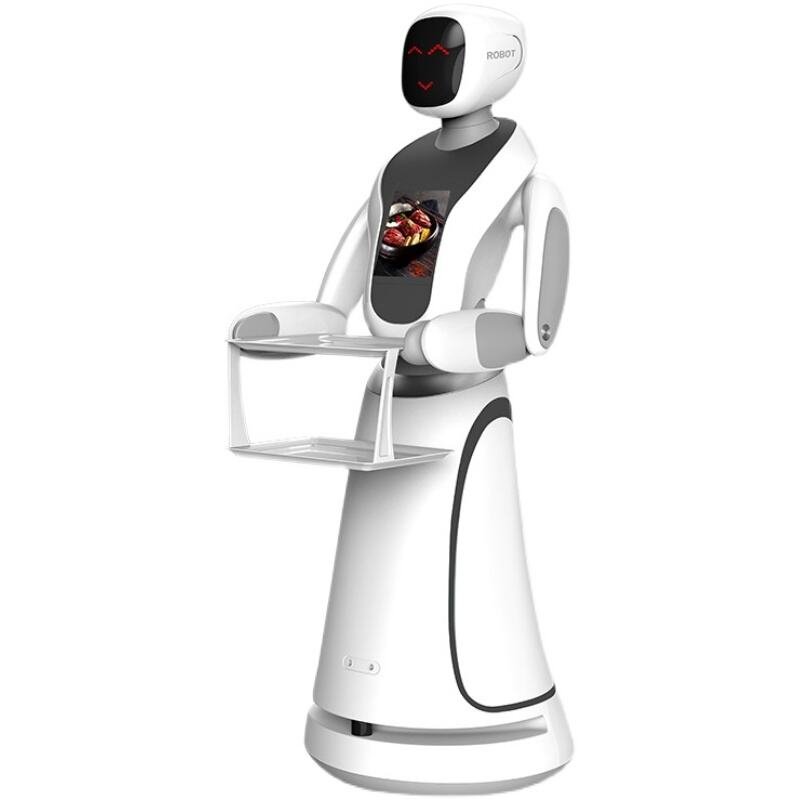
In an era where continuous operational availability defines competitive advantage, businesses operating around the clock face unprecedented challenges in maintaining consistent, high-quality customer engagement. The hospitality of a guest reception service robot emerges as a transformative solution that addresses the fundamental tension between human resource limitations and the unrelenting demands of 24/7 business scenarios. Unlike traditional staffing models that require shift rotations, compensation premiums, and inevitable variability in service quality, automated reception systems deliver unwavering performance standards regardless of hour, day, or workload intensity. This technological evolution represents more than mere automation; it embodies a strategic reimagining of how organizations can sustain hospitality excellence when human presence becomes logistically challenging or economically prohibitive.
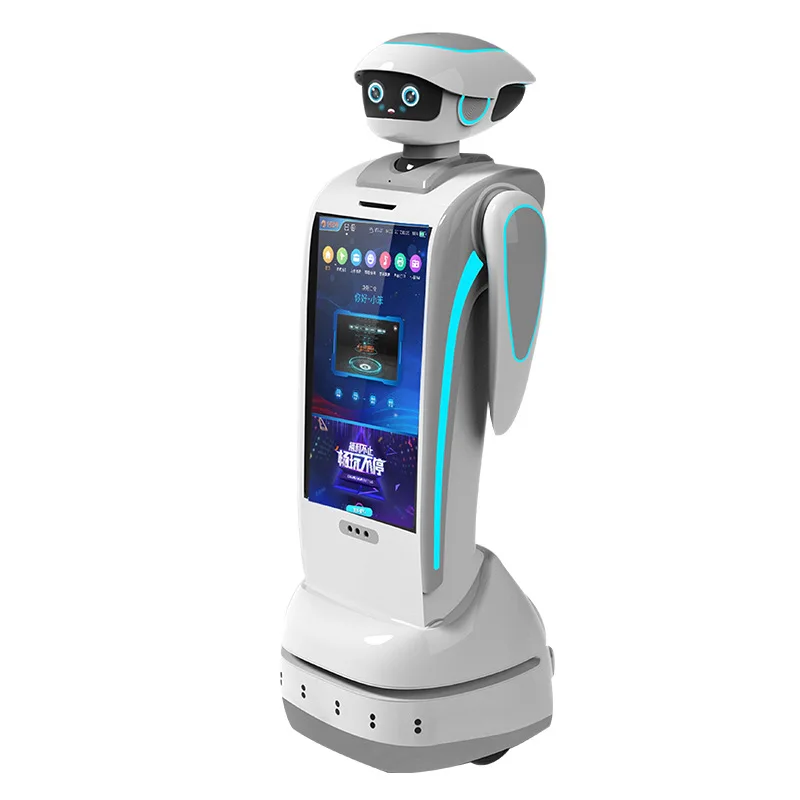
The concept of hospitality traditionally anchored itself in human warmth, intuition, and adaptability, qualities seemingly irreplaceable by mechanical systems. However, continuous operation environments from international hotels to medical facilities, logistics hubs to corporate campuses demand a different evaluation framework. The hospitality of a guest reception service robot must be assessed not against ideal human performance at peak hours, but against realistic human capabilities across extended timeframes including late-night shifts, holiday periods, and high-stress situations. Modern reception robotics platforms integrate advanced conversational interfaces, multilingual capabilities, real-time data access, and consistent behavioral protocols that collectively generate a hospitality experience uniquely suited to always-on operational contexts. Understanding how these systems deliver welcoming, efficient, and reliable interactions across all hours reveals why forward-thinking organizations increasingly view them as essential infrastructure rather than experimental novelties.
The Unique Hospitality Demands of Continuous Operation Environments
Service Consistency Across All Time Periods
Organizations operating continuously cannot afford hospitality degradation during off-peak hours when staffing naturally thins and fatigue accumulates among human teams. A guest reception service robot maintains identical performance parameters whether greeting the first visitor at dawn or the last departure at midnight. This temporal consistency eliminates the quality variance that naturally occurs in human-staffed environments where energy levels, attention spans, and interpersonal engagement fluctuate with circadian rhythms and shift progression. For international business hotels hosting guests from multiple time zones, this unwavering standard ensures that travelers arriving on red-eye flights receive the same welcoming efficiency as those checking in during conventional business hours.
The hospitality challenge in 24/7 scenarios extends beyond mere presence to encompass response accuracy, information currency, and procedural adherence. Human staff working overnight or extended shifts may struggle with protocol recall, database navigation, or maintaining enthusiasm when physical and mental fatigue set in. Automated reception systems access centralized knowledge bases instantaneously, apply decision trees without cognitive strain, and execute standard operating procedures with mechanical precision regardless of how many consecutive hours they have operated. This reliability becomes particularly critical in environments like healthcare facilities where reception functions directly impact patient care coordination, or in logistics centers where visitor management affects security protocols and operational efficiency.
Multilingual Accessibility Without Specialist Scheduling
Global business operations frequently encounter linguistic diversity that challenges traditional staffing approaches. Hiring multilingual human receptionists for all shifts creates scheduling complexity and labor cost escalation, particularly for less common language combinations. A guest reception service robot equipped with comprehensive language processing capabilities provides immediate communication in dozens of languages without requiring specialized human resources. This linguistic flexibility proves invaluable in international airports, trade exhibition centers, and multinational corporate headquarters where visitor demographics span continents and language requirements change unpredictably throughout operating hours.
The hospitality dimension of multilingual robot interaction extends beyond basic translation to cultural adaptation in greeting protocols, formality registers, and information presentation styles. Advanced systems recognize linguistic nuances that affect perceived welcomeness, adjusting conversational tone and interaction pacing according to detected language preferences. For a Chinese business delegation arriving at an European hotel at three in the morning, seamless Mandarin interaction from a guest reception service robot creates immediate comfort and confidence that their needs will be understood and addressed appropriately. This linguistic assurance becomes a foundational hospitality element that human-only operations struggle to guarantee across all hours without prohibitive staffing investments.
Scalability During Unpredictable Demand Surges
Continuous operation businesses frequently experience demand volatility that challenges workforce planning. Convention centers face concentrated arrival waves during event registration periods, hospitals encounter emergency admission surges, and hotels manage mass check-ins following flight delays or schedule changes. Human reception teams sized for average demand struggle during these peaks, creating queues, stress, and service degradation precisely when guest impressions form most acutely. The deployment flexibility of guest reception service robots allows organizations to position multiple units during anticipated high-traffic periods, then redeploy or deactivate them during lulls without incurring idle labor costs.
This scalability transforms hospitality economics in 24/7 environments by decoupling service capacity from fixed labor commitments. A large corporate campus can maintain minimal human staffing overnight while positioning robotic reception points at multiple building entrances, ensuring that late-working employees or early-morning vendors receive immediate assistance regardless of which access point they use. During daytime peaks, these same units augment human staff, handling routine inquiries and directional requests while human receptionists focus on complex problem-solving and relationship-intensive interactions. This dynamic resource allocation creates hospitality resilience that pure human staffing models cannot match without accepting either chronic understaffing during quiet periods or expensive overstaffing during normal operations.
Core Hospitality Functions Delivered by Reception Robotics
Welcoming Presence and Initial Engagement
The hospitality journey begins with first impressions, where presence, acknowledgment, and welcoming gestures establish the tone for all subsequent interactions. A guest reception service robot positioned prominently in entry areas provides immediate visual confirmation that assistance is available, eliminating the disorientation and abandonment feelings that empty reception desks create during off-hours. Advanced units incorporate motion sensors and facial detection that trigger proactive greetings as visitors approach, demonstrating attentiveness that mirrors human receptionist behavior. These greeting protocols can be customized to organizational culture, ranging from formal professional acknowledgments in corporate settings to warmer, more casual welcomes in hospitality environments.
Physical design elements contribute substantially to hospitality perception in robotic reception systems. Anthropomorphic features like screen-based facial representations, articulated appendages for gestural communication, and appropriately scaled dimensions create psychological accessibility that purely functional kiosks lack. Lighting, color schemes, and interface design all communicate brand identity and emotional tone. A guest reception service robot deployed in a luxury hotel presents differently than one serving an industrial facility, with aesthetic choices signaling the organization's values and the type of interaction visitors should expect. This design-driven hospitality works continuously without the personal mood variations, appearance inconsistencies, or behavioral unpredictability inherent in human presentation.
Information Provision and Wayfinding Assistance
Directional confusion and information gaps create immediate hospitality deficits in complex facilities. Convention centers with multiple halls, hospitals with sprawling departments, and corporate campuses with numerous buildings challenge even experienced human receptionists who may lack complete facility knowledge or struggle with infrequent destination requests. The guest reception service robot integrates comprehensive facility mapping, real-time event schedules, and dynamic routing algorithms that generate optimal directions regardless of starting position or destination complexity. This information certainty eliminates the apologetic uncertainty, conflicting directions, or outdated guidance that frustrated visitors often encounter from human staff working with incomplete knowledge.
The hospitality value of robotic wayfinding extends beyond accuracy to include presentation modality. Visual screen displays show facility maps with highlighted routes, while verbal directions provide step-by-step guidance in the visitor's preferred language. Some advanced systems offer escort functionality, physically guiding visitors to destinations while providing contextual information about the facility en route. This multimodal information delivery accommodates diverse learning styles and accessibility needs, ensuring that elderly visitors requiring slower-paced verbal guidance and tech-savvy younger guests preferring quick visual reference both receive hospitality tailored to their preferences. The consistency of this information quality at four in the afternoon or four in the morning represents a hospitality reliability that variable-quality human staffing cannot guarantee.
Process Facilitation and Administrative Support
Reception hospitality encompasses not just welcoming gestures but practical assistance with check-in procedures, credential issuance, appointment confirmation, and visitor registration workflows. The guest reception service robot streamlines these administrative functions through integrated systems that access scheduling databases, print badges, update attendance records, and notify internal personnel of visitor arrivals. This process efficiency reduces waiting times, minimizes form completion errors, and creates smooth transitions from arrival to intended destination. In healthcare settings, patients checking in for early-morning procedures appreciate rapid, accurate registration that reduces stress during already-anxious situations.
The hospitality dimension of administrative automation lies in its psychological impact on visitors who perceive institutional competence through operational smoothness. When check-in completes in seconds rather than minutes, when badge printers function reliably, and when appointment details appear instantly without staff searching through paperwork, visitors form positive impressions about organizational professionalism that extend beyond the reception interaction itself. A guest reception service robot maintains this administrative precision throughout continuous operations without the data entry errors, system navigation hesitations, or procedural shortcuts that fatigue induces in human operators. This reliability becomes a hospitality foundation upon which subsequent service experiences build, establishing trust and confidence from the initial organizational touchpoint.
Operational Advantages Enabling Sustained Hospitality Excellence
Elimination of Shift-Related Service Degradation
Human reception teams working rotating shifts inevitably experience performance variation tied to shift timing, workload distribution, and accumulated fatigue. The graveyard shift receptionist facing their eighth consecutive hour alone at three in the morning cannot realistically maintain the engagement energy, response speed, or emotional warmth of their colleague working a fresh morning shift. These human limitations create hospitality troughs during specific time periods that observant visitors notice and that organizational reputation suffers from. The guest reception service robot operates without physiological limitations, delivering identical interaction quality during the last minute of its operational period as during the first.
This elimination of shift-related degradation transforms service consistency in facilities like international airports where arriving passengers flow continuously but human staffing necessarily peaks and valleys. A business traveler arriving on a delayed midnight flight encounters the same efficient, courteous assistance from robotic reception systems as the tourist checking in during afternoon rush. This temporal equity in hospitality delivery addresses a fundamental fairness dimension where visitor experience should not depend on arrival timing. Organizations committed to genuine 24/7 service excellence recognize that maintaining human-quality hospitality across all hours requires either prohibitively expensive staffing or acceptance of inherent quality variation—or they adopt technological solutions that transcend these limitations.
Continuous Knowledge Base Access and Update Propagation
Reception hospitality depends critically on information accuracy regarding facility changes, event schedules, personnel availability, and procedural updates. Human receptionists receive information through shift briefings, email updates, and written notices—channels that create time lags, interpretation variations, and inevitable knowledge gaps across different team members. The guest reception service robot connects directly to centralized information systems, receiving real-time updates that propagate instantly across all deployed units. When a conference room location changes, an executive's availability shifts, or an emergency procedure activates, robotic reception systems reflect these updates immediately without waiting for human communication channels to cascade information through shift rotations.
This information currency creates hospitality value through visitor confidence in received guidance. When directions, schedules, and availability information prove consistently accurate, visitors trust the reception resource and experience reduced anxiety about navigation and appointment coordination. The alternative—receiving outdated information that leads to wasted time, missed appointments, or facility confusion—damages hospitality perceptions far more severely than modest interaction imperfections. A guest reception service robot serving a medical facility ensures that patients directed to relocated departments find them on first attempt, that visitors checking on patient status receive current information, and that emergency protocol questions receive answers reflecting the latest safety procedures. This information reliability becomes a hospitality differentiator that human-dependent systems struggle to match across continuous operations.
Predictable Operating Costs and Resource Allocation
Hospitality excellence in 24/7 scenarios faces constant economic pressure from labor costs, particularly premium rates for overnight and holiday shifts, overtime compensation, and benefits packages for adequate staffing depth. These cost realities force difficult trade-offs between service quality and financial sustainability, with many organizations accepting hospitality compromises during lower-traffic periods to control expenses. The economics of guest reception service robot deployment create different calculation parameters where higher initial capital investment yields predictable operating costs unaffected by shift differentials, overtime requirements, or benefits escalation.
This cost predictability enables strategic hospitality investments that human-staffing economics discourage. An organization can justify positioning reception robotics at secondary building entrances, satellite facilities, or temporary event locations knowing that operational costs remain constant regardless of actual utilization levels. This deployment flexibility allows hospitality extension into contexts where human staffing proves economically unjustifiable, broadening service accessibility without proportional cost increases. The cumulative effect transforms organizational capacity to deliver consistent welcome experiences across expanded physical footprints and extended time periods, democratizing hospitality quality that previously concentrated in primary locations during peak hours.
Integration Patterns Maximizing Hospitality Impact
Hybrid Human-Robot Reception Ecosystems
Optimal hospitality in complex 24/7 environments emerges from thoughtful integration of human expertise and robotic consistency rather than wholesale replacement strategies. The guest reception service robot handles routine inquiries, standard procedures, and information provision tasks that consume disproportionate human staff time while delivering minimal relationship-building value. This workload absorption frees human receptionists to focus on complex problem-solving, emotional support situations, and relationship-intensive interactions where human judgment, empathy, and creativity provide irreplaceable value. A hotel guest with special accommodation requests or complicated billing questions benefits from human attention, while routine check-ins, directions, and facility information queries flow efficiently through robotic channels.
This hybrid model creates hospitality scalability where organizations maintain lean human staffing during all hours while deploying robotic reception capacity that absorbs demand fluctuations and routine workload. During overnight periods, a single human supervisor oversees multiple robotic reception points across a facility, intervening only when situations exceed robotic capabilities or when visitors specifically request human assistance. This arrangement ensures that some human presence remains available for exceptional circumstances while the bulk of reception functions proceed through automated channels. The guest reception service robot thus functions not as human replacement but as force multiplier, extending hospitality reach beyond what human-only teams could achieve with comparable resources.
Backend System Integration for Seamless Service Delivery
Reception hospitality quality depends heavily on access to operational systems containing scheduling data, visitor records, facility information, and process workflows. Siloed reception technology that lacks backend integration creates information gaps requiring supplementary human intervention and diminishing automation value. Comprehensive guest reception service robot implementations connect deeply with property management systems, visitor management platforms, access control infrastructure, and communication networks. This integration enables automated check-in processes that update multiple systems simultaneously, visitor notifications that alert appropriate personnel instantly, and credential issuance that activates relevant access permissions without manual coordination.
The hospitality enhancement from deep system integration manifests in reduced visitor effort and accelerated service delivery. A corporate campus visitor completes registration once through the robotic interface, triggering automatic host notification, temporary badge activation, parking assignment, and facility map provision without requiring multiple interactions or redundant information entry. This operational smoothness creates hospitality perceptions of organizational competence and visitor value. The alternative—disjointed processes requiring visitors to interact with multiple systems and repeat information across channels—signals institutional dysfunction that undermines hospitality intent regardless of individual interaction pleasantness. The guest reception service robot achieves its full hospitality potential only when embedded in comprehensive operational ecosystems rather than functioning as standalone technology islands.
Analytics-Driven Continuous Improvement
Unlike human reception interactions that leave limited performance data, robotic systems generate comprehensive analytics regarding interaction patterns, inquiry types, service completion rates, and user satisfaction indicators. Organizations leveraging guest reception service robots can analyze which information requests occur most frequently at different times, where wayfinding confusion concentrates, what interaction durations characterize different service types, and which demographic groups encounter usability challenges. These insights drive iterative improvements in interface design, information architecture, procedural workflows, and resource positioning that progressively enhance hospitality effectiveness.
This analytical foundation transforms reception hospitality from static service delivery to continuously evolving capability. When data reveals that international visitors disproportionately struggle with certain interaction sequences, interface modifications address these friction points. When inquiry patterns show concentrated demand for specific information types during particular hours, content prioritization adjusts accordingly. The guest reception service robot becomes a learning system that incrementally optimizes hospitality delivery based on actual visitor behavior rather than assumptions about ideal service design. This evidence-based refinement capability represents a hospitality improvement mechanism unavailable in purely human-operated reception contexts where performance insights depend on subjective observation and anecdotal feedback rather than comprehensive behavioral data.
Industry-Specific Hospitality Applications
Healthcare Facilities and Patient Experience
Medical environments operate continuously with patient arrivals spanning all hours, creating reception demands complicated by emotional stress, cognitive impairment from illness, and urgent care coordination needs. The guest reception service robot in healthcare contexts provides immediate assistance to patients and families arriving for emergency services, early-morning procedures, or late-night discharges when human reception staffing naturally thins. The consistent, patient interaction protocol ensures that elderly patients requiring slower-paced guidance and anxious family members seeking loved ones receive attentive support regardless of arrival timing.
Healthcare reception hospitality extends beyond basic wayfinding to include check-in verification, insurance documentation capture, medical history confirmation, and care team notification—administrative functions that medical staff cannot abandon patient care to perform. Robotic reception systems handle these workflows while maintaining HIPAA-compliant data security and generating audit trails for compliance documentation. The hospitality value manifests in reduced patient anxiety through clear guidance, shortened waiting periods through efficient processing, and improved care coordination through reliable notification systems. A patient arriving for outpatient surgery at five in the morning encounters the same thorough, accurate registration process that daytime patients experience, ensuring that medical teams receive complete information regardless of check-in timing.
Corporate Campuses and Visitor Management
Large corporate facilities hosting client meetings, vendor interactions, and employee access across extended hours require reception capabilities that balance security protocols with welcoming accessibility. The guest reception service robot manages visitor registration, credential verification, access authorization, and host notification while maintaining detailed audit logs for security compliance. This systematic processing ensures that early-morning delivery personnel, late-evening maintenance contractors, and weekend event attendees all experience consistent security screening without requiring expensive round-the-clock human security staff.
Corporate reception hospitality through robotic systems extends to brand representation where interaction design, visual presentation, and communication style reflect organizational identity. A technology company might deploy conversational interfaces emphasizing innovation and efficiency, while a financial institution configures formal, security-focused protocols. The guest reception service robot becomes an always-on brand ambassador delivering consistent identity expression that variable human presentation cannot guarantee. When international clients visit headquarters for critical negotiations, their midnight arrival due to flight schedules encounters the same professional, brand-consistent welcome that daytime visitors experience, signaling organizational sophistication and global operational competence.
Hospitality Industry and Guest Services
Hotels, resorts, and conference centers represent natural contexts for guest reception service robots where hospitality expectations run highest and operational hours span continuously. These systems handle check-in and check-out procedures, concierge inquiries about local attractions, service requests for room amenities, and facility navigation assistance. The robotic approach proves particularly valuable in limited-service properties where overnight human staffing proves economically challenging but guest needs continue regardless of hour. A business traveler checking in at two in the morning receives immediate room assignment, key issuance, and facility orientation rather than finding abandoned reception desks with emergency contact numbers.
Hospitality industry applications showcase how guest reception service robots complement rather than replace human staff by absorbing routine transactions while escalating complex situations to human attention. When guests encounter billing disputes, special accommodation requests, or complaint situations, robotic systems recognize these exceptions and initiate immediate human notification rather than attempting resolution beyond their capability parameters. This intelligent triage creates hospitality efficiency where technology handles what it does best—consistent, accurate, procedural transactions—while preserving human involvement for judgment-intensive, relationship-critical interactions. The result is expanded service availability without quality dilution across the full spectrum of guest needs.
FAQ
How does a guest reception service robot handle visitors who prefer human interaction?
Modern reception robotics systems incorporate explicit human escalation options that visitors can select at any interaction point. These systems recognize that some visitors prefer human assistance due to comfort preferences, interaction complexity, or accessibility needs. When visitors indicate human preference, the robot immediately notifies available human staff while providing interim assistance to minimize waiting periods. In hybrid deployment models, human receptionists remain accessible alongside robotic systems, allowing visitors to choose their preferred service channel. This choice architecture respects individual preferences while maintaining automated efficiency for those comfortable with robotic interaction, creating inclusive hospitality that accommodates diverse visitor needs rather than forcing universal adoption of technology-mediated service.
What happens when the guest reception service robot encounters technical malfunctions during operation?
Comprehensive reception robotics deployments incorporate redundancy planning, remote monitoring, and graceful degradation protocols that minimize service disruption during technical issues. Systems include self-diagnostic capabilities that detect performance anomalies and automatically alert technical support teams before complete failures occur. When malfunctions do arise, backup units can be activated, or operations shift to hybrid human support while repairs proceed. Many platforms include remote troubleshooting capabilities where technical specialists can resolve software issues without physical presence. Organizations implementing reception robotics develop contingency protocols ensuring that visitor service continues through alternative channels during system downtime, preventing hospitality gaps that would damage guest experience and operational reputation.
Can guest reception service robots effectively serve visitors with disabilities or special accessibility needs?
Advanced reception robotics platforms incorporate extensive accessibility features addressing visual, auditory, mobility, and cognitive impairments. Screen interfaces support adjustable text sizing, high-contrast modes, and screen reader compatibility for visually impaired users. Audio systems provide clear verbal guidance with adjustable volume and speech rate for hearing-impaired visitors. Physical design considers wheelchair accessibility with appropriate height positioning and reach zones. Simplified interaction modes accommodate cognitive differences and language barriers through icon-based navigation and multilingual support. These accessibility features operate consistently across all hours, ensuring that visitors with special needs receive appropriate assistance regardless of when they arrive—a hospitality dimension particularly valuable during off-hours when specialized human support may be unavailable or limited in facilities with reduced overnight staffing.
How do organizations measure the hospitality effectiveness of guest reception service robots?
Hospitality assessment for reception robotics combines quantitative metrics and qualitative feedback mechanisms. Systems track interaction completion rates, average transaction times, escalation frequencies to human assistance, and return usage patterns indicating visitor comfort with robotic service. Post-interaction surveys capture satisfaction ratings, perceived helpfulness, and preference comparisons with human reception alternatives. Organizations analyze inquiry patterns, navigation success rates, and service request resolution statistics to identify hospitality gaps requiring system refinement. Advanced implementations correlate reception metrics with broader operational indicators like appointment punctuality, complaint frequencies, and overall facility satisfaction scores. This multi-dimensional measurement approach reveals whether robotic reception enhances or impedes overall visitor experience, guiding continuous improvement efforts that progressively optimize hospitality delivery across continuous operation scenarios.
Table of Contents
- The Unique Hospitality Demands of Continuous Operation Environments
- Core Hospitality Functions Delivered by Reception Robotics
- Operational Advantages Enabling Sustained Hospitality Excellence
- Integration Patterns Maximizing Hospitality Impact
- Industry-Specific Hospitality Applications
-
FAQ
- How does a guest reception service robot handle visitors who prefer human interaction?
- What happens when the guest reception service robot encounters technical malfunctions during operation?
- Can guest reception service robots effectively serve visitors with disabilities or special accessibility needs?
- How do organizations measure the hospitality effectiveness of guest reception service robots?