
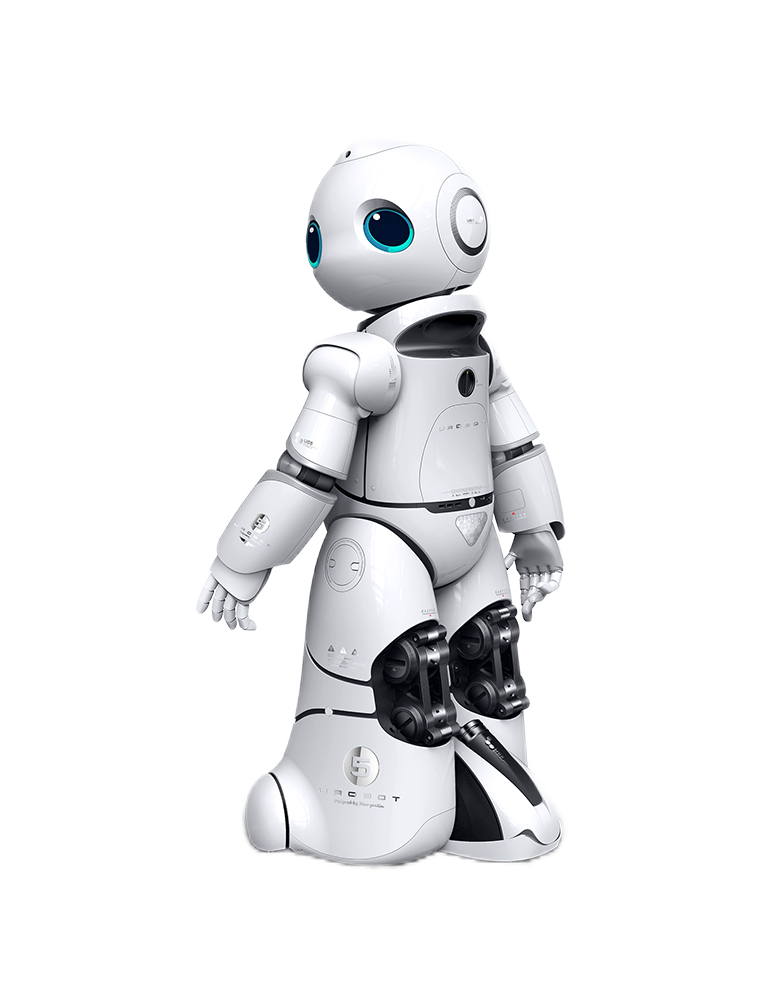
The global artificial intelligence service robot industry has witnessed a dramatic shift in leadership over the past decade, with Guangdong robot companies emerging as the dominant force driving innovation, manufacturing excellence, and market expansion. This southern Chinese province, long recognized as the world's manufacturing powerhouse, has strategically positioned itself at the intersection of advanced robotics engineering, AI algorithm development, and large-scale production capacity. The convergence of these factors has enabled Guangdong robot companies to not only capture significant global market share but also to set new standards for intelligent service robot performance, affordability, and application versatility across industries ranging from hospitality and healthcare to retail and government services.
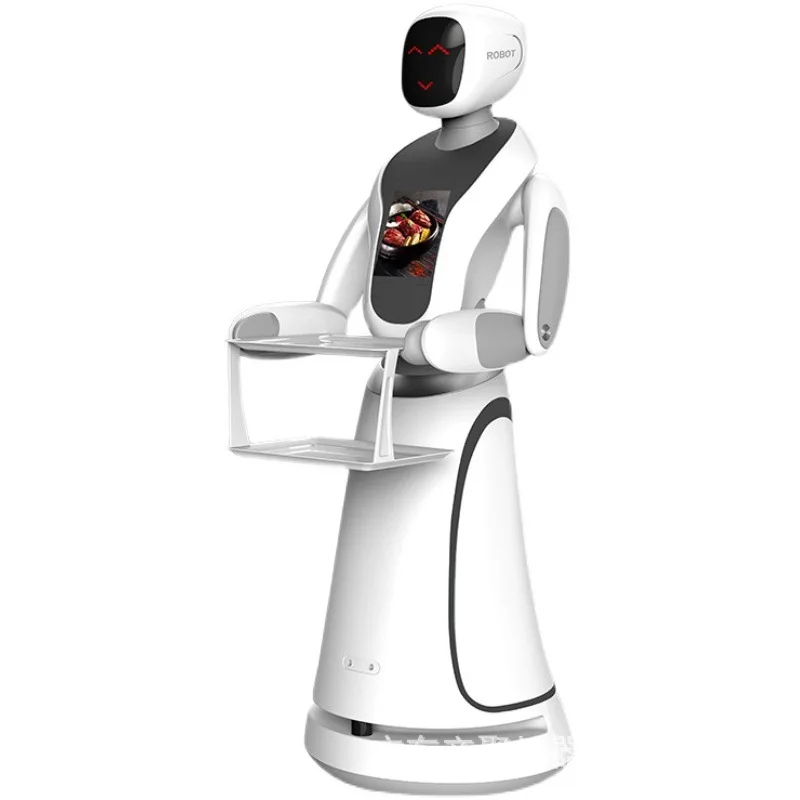
Understanding why Guangdong robot companies have achieved this leadership position requires examining a complex ecosystem that combines government policy support, deep supply chain integration, technological innovation capacity, and aggressive international expansion strategies. Unlike robotics hubs in other regions that focus primarily on research or niche applications, Guangdong has built a comprehensive ecosystem that spans the entire value chain from component manufacturing to software development and end-user deployment. This systemic approach has created competitive advantages that are difficult for other regions to replicate, particularly in the rapidly growing service robot segment where cost efficiency, customization capability, and rapid iteration cycles determine market success.
Strategic Industrial Foundation and Infrastructure Advantages
Unmatched Manufacturing Ecosystem Integration
The success of Guangdong robot companies stems fundamentally from the province's unparalleled manufacturing infrastructure that has been developed over four decades of industrial evolution. The Pearl River Delta region, encompassing cities like Shenzhen, Guangzhou, Dongguan, and Foshan, hosts the world's most comprehensive electronics and precision manufacturing supply chain. This geographic concentration means that Guangdong robot companies can source virtually any component—from high-precision servo motors and advanced sensors to circuit boards and display panels—within hours rather than weeks. This proximity dramatically reduces prototyping costs, accelerates product development cycles, and enables rapid scaling from pilot production to mass manufacturing.
The supply chain density in Guangdong creates network effects that compound competitive advantages for local robot manufacturers. When a Guangdong robot company needs to modify a sensor housing or test a new navigation algorithm, they can quickly iterate with nearby suppliers and contract manufacturers who understand robotics requirements and can provide immediate feedback. This speed of iteration is particularly crucial in the AI service robot sector, where customer requirements vary significantly across applications and continuous improvement based on deployment feedback determines long-term product success. International competitors operating from regions with less integrated supply chains typically face weeks or months of lead time for similar modifications, putting them at a substantial disadvantage in responding to market demands.
Government Policy and Investment Support
Provincial and municipal governments in Guangdong have implemented comprehensive industrial policies specifically designed to accelerate robotics and artificial intelligence development. These policies extend beyond simple tax incentives to include dedicated robotics industrial parks with subsidized facilities, government-backed venture capital funds focused on AI robotics startups, and procurement programs that guarantee initial market access for locally developed service robots. The Guangdong government's 'Robot Industry Development Plan' allocated billions of yuan in direct subsidies and low-interest loans to qualifying robotics companies, enabling them to invest heavily in research and development without the immediate profitability pressures that constrain startups in other regions.
Beyond financial support, Guangdong authorities have facilitated partnerships between Guangdong robot companies and leading universities, creating joint research laboratories and talent development programs that address the critical shortage of robotics engineers and AI specialists. These initiatives have produced a steady pipeline of qualified technical personnel who understand both theoretical robotics principles and practical manufacturing constraints. The policy environment also encourages experimentation by reducing regulatory barriers for pilot deployments in public spaces, allowing Guangdong robot companies to gather real-world performance data and refine their products faster than competitors operating in more restrictive regulatory environments.
Access to Advanced Component Manufacturing
Guangdong's position as a global electronics manufacturing center provides local robot companies with privileged access to cutting-edge component technologies often unavailable or prohibitively expensive for international competitors. The province hosts major production facilities for advanced sensors, high-resolution cameras, lithium battery systems, and specialized computing hardware—all critical components for intelligent service robots. This local availability means Guangdong robot companies can incorporate the latest sensor technologies into their designs months before these components become widely available on international markets, creating temporary but significant performance advantages.
The concentration of component manufacturers also drives continuous cost reduction through economies of scale and competitive pressure. As Guangdong robot companies scale their production volumes, component suppliers compete aggressively for their business, leading to price reductions that further improve the cost competitiveness of Guangdong-manufactured service robots. This virtuous cycle of volume growth driving cost reduction has enabled Guangdong robot companies to offer products with capabilities comparable to international competitors at price points often thirty to fifty percent lower, a differential that has proven decisive in winning contracts in cost-sensitive markets across Asia, the Middle East, and Latin America.
Technological Innovation and AI Development Capabilities
Integrated Hardware and Software Development
A distinguishing characteristic of leading Guangdong robot companies is their ability to develop integrated hardware-software solutions rather than relying on separate suppliers for mechanical platforms and intelligence software. This vertical integration approach allows Guangdong robot companies to optimize AI algorithms specifically for their hardware configurations, achieving better performance and energy efficiency than competitors who assemble systems from disparate components. The tight coupling between hardware design and software development teams enables rapid troubleshooting and feature enhancement based on deployment feedback, creating products that evolve quickly to meet specific application requirements.
The AI capabilities developed by Guangdong robot companies have progressed rapidly from basic navigation and obstacle avoidance to sophisticated natural language processing, facial recognition, and contextual interaction capabilities. Many leading firms maintain substantial AI research teams that collaborate with universities and research institutions to incorporate the latest advances in computer vision, speech recognition, and machine learning into commercial products. This research investment has yielded proprietary algorithms for crowd navigation, multi-modal interaction, and autonomous charging that provide competitive differentiation in crowded service robot markets where basic functionality has become commoditized.
Rapid Prototyping and Market Testing Cycles
The operational model of successful Guangdong robot companies emphasizes rapid iteration based on actual deployment experience rather than extended laboratory development. Companies typically launch initial product versions into friendly customer environments within months of concept development, gathering extensive usage data that informs subsequent design improvements. This approach contrasts sharply with traditional robotics development models that emphasize extended pre-launch testing and refinement. The Guangdong model accepts that initial versions will have limitations but prioritizes learning from real-world deployment over theoretical perfection.
This rapid iteration capability is enabled by the manufacturing flexibility available in Guangdong's supply chain ecosystem. When deployment data reveals opportunities for improvement—whether in battery life, speaker clarity, or navigation smoothness—Guangdong robot companies can quickly modify designs and implement changes in subsequent production runs without the lengthy re-tooling processes that constrain manufacturers in other regions. This agility has proven particularly valuable in the service robot market where application requirements vary significantly across industries and customer preferences evolve rapidly as users become more familiar with robot capabilities and limitations.
Focus on Practical Application Over Theoretical Innovation
While robotics research institutions in other regions often prioritize publishing academic papers and achieving laboratory performance benchmarks, Guangdong robot companies maintain relentless focus on solving practical deployment challenges that determine commercial success. This pragmatic orientation means development resources concentrate on reliability improvements, user interface refinement, and cost reduction rather than pursuing marginal performance gains in controlled environments. The result is products that may not represent the absolute cutting edge of robotics research but deliver consistent, reliable performance in the messy, unpredictable conditions of actual customer environments.
This practical focus has enabled Guangdong robot companies to identify and address critical adoption barriers that academic researchers often overlook. Issues like simplifying setup procedures for non-technical staff, ensuring reliable performance under varying lighting conditions, and minimizing maintenance requirements have received systematic attention from Guangdong developers because these factors directly impact customer satisfaction and repeat purchase rates. The resulting products often demonstrate superior real-world reliability compared to technically sophisticated systems that perform brilliantly in laboratory conditions but struggle with the variability and unpredictability of actual deployment environments.
Market Strategy and Global Expansion Approach
Aggressive International Market Penetration
Guangdong robot companies have pursued international expansion with remarkable aggressiveness, establishing sales offices, demonstration centers, and technical support facilities across Asia, Europe, the Middle East, and the Americas. This global presence allows them to understand local market requirements, adapt products to regional preferences, and provide the after-sales support that enterprise customers demand when deploying service robots. Unlike some Chinese manufacturers that rely primarily on distributors for international sales, leading Guangdong robot companies invest in direct market presence to build brand recognition and gather unfiltered customer feedback.
The international expansion strategy typically begins with markets where cost considerations are paramount and regulatory barriers are relatively low, such as Southeast Asia, the Middle East, and parts of Latin America. Success in these markets provides revenue for further product development and builds reference cases that facilitate entry into more demanding markets in Europe and North America. Many Guangdong robot companies have achieved impressive penetration in hospitality, retail, and healthcare sectors across multiple continents, with their products serving as greeters, guides, and information providers in hotels, shopping centers, hospitals, and government offices worldwide.
Flexible Business Models and Customer Partnership
Recognizing that the high upfront cost of service robots creates adoption barriers, innovative Guangdong robot companies have developed flexible business models including leasing arrangements, revenue-sharing agreements, and robot-as-a-service offerings. These models reduce the initial investment required from customers and align the interests of robot manufacturers with deployment success, creating strong incentives for ongoing support and continuous improvement. The willingness to experiment with business model innovation distinguishes leading Guangdong robot companies from competitors that insist on traditional outright purchase models.
Customer partnership extends beyond financial arrangements to include collaborative development relationships where Guangdong robot companies work closely with major clients to develop customized capabilities for specific applications. A bank might collaborate with a Guangdong robot company to develop specialized customer service scripts and integration with banking information systems, while a hospital might work with the same manufacturer to optimize patient guidance capabilities and medical terminology handling. These partnerships generate deep application expertise that feeds back into product development, enabling Guangdong robot companies to offer increasingly sophisticated industry-specific solutions that generic robot platforms cannot match.
Brand Building Through Deployment Volume
Rather than attempting to establish premium brand positioning through limited high-profile deployments, successful Guangdong robot companies have pursued volume-based brand building strategies. By deploying thousands of service robots across diverse applications and geographies, they have created broad familiarity with their brands and products among both end-users and potential customers. This visibility generates inbound sales inquiries and reduces customer acquisition costs while providing massive amounts of deployment data that drive continuous product improvement.
The volume deployment strategy also creates powerful network effects in terms of technical expertise and ecosystem development. As more organizations deploy robots from leading Guangdong robot companies, a growing community of system integrators, maintenance providers, and application developers emerges to support these installations. This ecosystem makes subsequent deployments easier and less risky for new customers, who can leverage existing expertise and proven integration patterns rather than pioneering entirely novel implementations. The resulting positive feedback loop reinforces the market position of high-volume Guangdong robot companies while creating barriers to entry for new competitors who lack comparable deployment bases.
Competitive Advantages in the Service Robot Segment
Cost Structure Optimization
The all-encompassing cost advantages enjoyed by Guangdong robot companies extend across every element of the value chain, from component procurement and manufacturing to software development and logistics. Labor costs in Guangdong, while higher than in some other Chinese provinces, remain substantially below those in developed economies, allowing companies to maintain larger engineering teams and more comprehensive testing programs than international competitors with similar revenues. Manufacturing costs benefit from economies of scale, supply chain proximity, and intense competition among contract manufacturers, while logistics costs are minimized by Guangdong's world-class port infrastructure and proximity to major shipping routes.
These structural cost advantages translate into pricing flexibility that proves decisive in competitive situations. Guangdong robot companies can offer products with comparable or superior capabilities at prices that international competitors cannot match while maintaining healthy profit margins. This pricing power has enabled rapid market share gains in cost-sensitive segments like retail and hospitality while providing resources for continued investment in research and development. The cost advantage is not simply a matter of accepting lower margins but reflects genuine structural efficiencies that are difficult for competitors in high-cost regions to replicate.
Customization Capability and Speed
The flexible manufacturing infrastructure available to Guangdong robot companies enables extensive product customization without the prohibitive costs and lengthy lead times that characterize customization in other manufacturing contexts. Customers can request modifications to physical appearance, software interfaces, interaction scripts, and functional capabilities, with many Guangdong robot companies able to deliver customized units within weeks rather than the months typically required by international competitors. This customization capability is particularly valuable in the service robot market where branding requirements, space constraints, and specific functional needs vary significantly across deployments.
The speed and affordability of customization create opportunities for Guangdong robot companies to serve market segments that international competitors find unprofitable. A regional hotel chain might require robots customized with specific branding and local language capabilities in quantities too small to interest large international manufacturers, but perfectly suited to the flexible production capabilities of Guangdong robot companies. By serving these specialized niches effectively, Guangdong manufacturers build diverse customer bases and gain exposure to varied application requirements that inform broader product development strategies.
Application Breadth and Versatility
Leading Guangdong robot companies have deliberately developed service robot platforms with broad application potential rather than optimizing for narrow use cases. A single base platform might be deployed as a retail assistant in shopping centers, a patient guide in hospitals, a visitor receptionist in corporate offices, and a public service information provider in government buildings, with differentiation achieved primarily through software configuration and cosmetic customization. This platform approach maximizes development efficiency and manufacturing scale while providing customers with proven reliability across diverse applications.
The versatility of Guangdong-manufactured service robots reflects deliberate design choices that prioritize adaptability over specialized optimization. Navigation systems are designed to handle various floor surfaces, lighting conditions, and crowd densities rather than being optimized for specific environments. Interaction systems support multiple languages and communication modalities to accommodate diverse user populations. Charging systems and maintenance protocols are standardized to simplify support across different deployment contexts. These design philosophies, while sometimes requiring trade-offs in peak performance for specific applications, create products that deliver acceptable performance across a wide range of uses, maximizing market opportunity and deployment flexibility.
Future Trajectory and Sustained Innovation
Continued Investment in Core Technologies
Despite their current market leadership, forward-looking Guangdong robot companies continue to invest heavily in advancing core technologies that will determine competitive positioning in future market phases. Areas of intense research investment include advanced computer vision for more sophisticated environmental understanding, improved natural language processing for more natural human interaction, enhanced manipulation capabilities for service robots that can perform physical tasks beyond information provision, and energy systems that extend operational duration between charging cycles. These investments reflect recognition that current advantages, while substantial, must be continuously reinforced through technological advancement to maintain leadership as the market matures and competition intensifies.
The research strategy pursued by leading Guangdong robot companies balances internal development, academic collaboration, and strategic acquisition of specialized technology firms. Internal research teams focus on applied development that directly enhances product capabilities, while university partnerships provide access to fundamental research and emerging concepts. Strategic acquisitions target specialized capabilities—such as advanced voice recognition or emotion detection algorithms—that would require years to develop internally but can be integrated relatively quickly when acquired as complete solutions. This multi-pronged approach to technology development maintains the innovation momentum necessary to stay ahead of emerging competitors.
Expansion Into Adjacent Market Segments
Building on their success in service robots for hospitality, retail, and public spaces, ambitious Guangdong robot companies are expanding into adjacent segments including healthcare assistance, elderly care, education, and entertainment applications. These expansions leverage existing core competencies in navigation, interaction, and AI while requiring development of specialized capabilities and domain knowledge. Healthcare robots, for instance, must meet stringent regulatory requirements and integrate with medical information systems, while education robots require age-appropriate interaction designs and curriculum-aligned content.
The expansion strategy typically involves partnerships with domain experts who provide application knowledge and market access while Guangdong robot companies contribute robotics and AI expertise. A collaboration with a hospital chain might yield robots optimized for patient guidance and basic health information provision, while a partnership with an educational institution could produce robots designed for interactive learning and tutoring applications. These partnerships accelerate market entry and reduce the risk of expensive missteps while building the domain expertise necessary for long-term success in these specialized segments.
Global Brand Building and Premium Positioning
As they consolidate leadership in value-oriented service robot segments, leading Guangdong robot companies are increasingly focusing on brand building and premium market positioning to capture higher-value opportunities in developed markets. This evolution involves investments in industrial design, user experience refinement, and comprehensive service offerings that address the total cost of ownership rather than simply the initial purchase price. The goal is to transition from being perceived primarily as cost-effective alternatives to international brands toward being recognized as innovation leaders offering superior overall value.
This brand elevation strategy requires sustained excellence in product quality, reliability, and customer support—areas where some Guangdong robot companies have historically struggled relative to established international brands. Leading firms are addressing these challenges through systematic quality management improvements, expanded global support networks, and long-term customer success programs that ensure deployed robots continue to deliver value throughout their operational lives. Success in this brand evolution will determine whether Guangdong robot companies can sustain margin expansion and leadership positions as the service robot market matures and competition extends beyond initial price-based differentiation.
FAQ
What specific technological advantages do Guangdong robot companies have over international competitors?
Guangdong robot companies possess several technological advantages rooted in their integrated development approach and manufacturing ecosystem. Their ability to rapidly prototype and iterate hardware-software combinations allows faster incorporation of AI advances into commercial products compared to competitors with separated hardware and software development processes. Access to cutting-edge component manufacturing in Guangdong enables early adoption of new sensor and computing technologies before they become widely available internationally. Additionally, the massive deployment volumes achieved by leading Guangdong robot companies generate extensive real-world performance data that drives continuous algorithm refinement and reliability improvements that laboratory-focused competitors cannot easily replicate.
How do Guangdong robot companies maintain cost advantages while investing in research and development?
The cost advantages of Guangdong robot companies reflect structural efficiencies throughout their operations rather than simply lower labor costs or reduced investment in development. Supply chain proximity dramatically reduces component costs and eliminates logistics expenses that burden international competitors. Manufacturing scale economies, facilitated by the large production volumes that price competitiveness enables, reduce per-unit production costs substantially. Government support through subsidies, preferential financing, and reduced facility costs allows significant research investment without requiring full cost recovery through product pricing. This combination of structural advantages and policy support enables simultaneous cost leadership and substantial development investment that would be difficult to achieve in other manufacturing contexts.
Can service robots from Guangdong robot companies meet the quality standards required for deployment in developed markets?
Leading Guangdong robot companies have systematically addressed quality concerns that initially limited their acceptance in developed markets, with many now achieving certifications and reliability standards comparable to international competitors. Products undergo extensive testing protocols that verify performance under diverse environmental conditions, and quality management systems have been upgraded to international standards through ISO certification and customer audit processes. Thousands of successful deployments across Europe, North America, and developed Asian markets demonstrate that well-engineered products from established Guangdong robot companies can meet demanding reliability and safety requirements. However, quality variation exists among manufacturers, making careful vendor selection and specification verification essential for customers in regulated industries or those with stringent performance requirements.
What role does government support play in the success of Guangdong robot companies?
Government support has been instrumental in accelerating the development of Guangdong robot companies, though not solely determinative of their success. Financial support through subsidies, tax incentives, and preferential financing reduced initial capital barriers and enabled sustained research investment during the market development phase when revenues were insufficient to fund substantial innovation programs. Industrial policies that facilitated university partnerships, created talent development programs, and provided guaranteed initial markets through government procurement helped companies achieve the scale necessary for cost competitiveness. Regulatory flexibility for pilot deployments allowed rapid real-world testing and refinement. However, the ultimate success of Guangdong robot companies reflects effective execution, genuine technological capability, and competitive products rather than simply policy support, as evidenced by their growing international market share achieved through commercial competition rather than policy-driven preference.
Table of Contents
- Strategic Industrial Foundation and Infrastructure Advantages
- Technological Innovation and AI Development Capabilities
- Market Strategy and Global Expansion Approach
- Competitive Advantages in the Service Robot Segment
- Future Trajectory and Sustained Innovation
-
FAQ
- What specific technological advantages do Guangdong robot companies have over international competitors?
- How do Guangdong robot companies maintain cost advantages while investing in research and development?
- Can service robots from Guangdong robot companies meet the quality standards required for deployment in developed markets?
- What role does government support play in the success of Guangdong robot companies?