
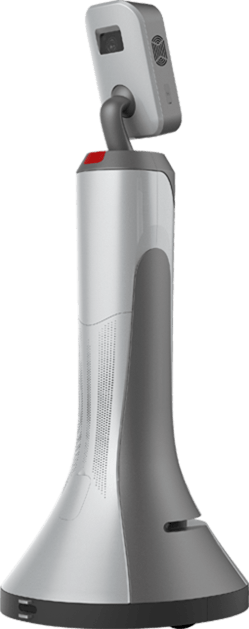
The modern landscape of service automation is increasingly defined by sophisticated robotic solutions that transform customer interactions across industries. At the heart of this revolution lies the specialized infrastructure and expertise found within a professional reception robot production factory, where advanced engineering, precision manufacturing, and quality control converge to create machines capable of delivering seamless hospitality experiences. Understanding the production excellence that distinguishes leading manufacturing facilities reveals why certain reception robots consistently outperform competitors in reliability, functionality, and long-term operational value. This exploration into factory-level excellence illuminates the technical foundations, process disciplines, and organizational capabilities that separate exceptional manufacturers from conventional assembly operations.
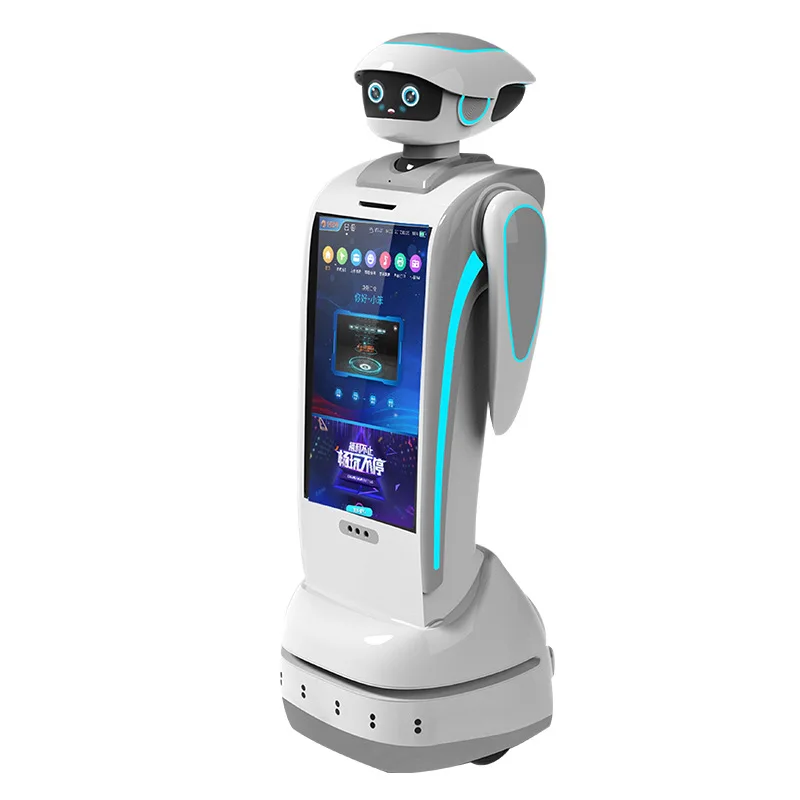
A professional reception robot production factory represents far more than a simple manufacturing space equipped with assembly lines and robotic arms. These specialized facilities embody integrated ecosystems where research and development, component engineering, software development, hardware assembly, quality assurance, and post-production support operate in coordinated harmony. The production excellence evident in top-tier factories stems from deliberate investments in technological infrastructure, human capital development, process standardization, and continuous improvement methodologies that collectively ensure each unit leaving the production floor meets rigorous performance benchmarks. For businesses evaluating reception robot suppliers, understanding these underlying production capabilities provides critical insight into product longevity, service consistency, and total cost of ownership over the deployment lifecycle.
Engineering Foundation and Design Integration
Advanced Prototyping and Development Laboratories
The production excellence journey within a reception robot production factory begins long before the first production unit rolls off the assembly line. Top-tier facilities maintain dedicated prototyping laboratories where interdisciplinary engineering teams collaborate to refine mechanical designs, integrate sensor arrays, optimize navigation algorithms, and validate human-robot interaction protocols. These development environments feature rapid prototyping equipment including industrial-grade 3D printers, CNC machining centers, and environmental simulation chambers that allow engineers to test designs under varied operational conditions. The iterative refinement process conducted in these laboratories directly influences production efficiency by identifying potential manufacturing challenges, component sourcing issues, and assembly sequence optimizations before full-scale production commences.
Leading reception robot production factory operations recognize that design excellence fundamentally enables manufacturing excellence. Engineering teams work closely with production specialists to ensure that product designs incorporate Design for Manufacturing principles, which optimize component geometries for automated assembly, minimize part count through intelligent integration, and standardize fastening systems to reduce assembly time and error rates. This collaborative approach between design and manufacturing functions ensures that innovative features and sophisticated capabilities can be reliably reproduced at scale without compromising quality standards or inflating production costs. The technical documentation, assembly instructions, and quality checkpoints developed during this phase form the operational backbone of the production system.
Component Quality and Supply Chain Management
Production excellence in a reception robot production factory depends critically on the quality and consistency of incoming components and subassemblies. Professional manufacturing operations implement rigorous supplier qualification processes that evaluate potential partners based on quality management certifications, production capacity, technical capabilities, and demonstrated reliability in high-precision component manufacturing. For critical systems such as navigation sensors, motor controllers, computing modules, and display interfaces, leading factories often maintain dual-source strategies or develop proprietary components to ensure supply continuity and performance consistency. Incoming inspection protocols verify dimensional tolerances, electrical specifications, and functional performance before components enter inventory systems, preventing defective parts from reaching assembly lines.
The supply chain architecture supporting a professional reception robot production factory extends beyond simple vendor relationships to encompass strategic partnerships with specialized technology providers. Advanced facilities maintain close technical collaboration with sensor manufacturers, battery technology developers, artificial intelligence platform providers, and industrial automation specialists. These partnerships enable early access to emerging technologies, customization of standard components for specific application requirements, and collaborative problem-solving when production challenges arise. The maturity and depth of these supply relationships often distinguish exceptional manufacturers from those struggling with component availability, performance variability, or obsolescence issues that disrupt production schedules and compromise product quality.
Manufacturing Process Excellence and Quality Control
Precision Assembly Systems and Automation Integration
The assembly floor of a professional reception robot production factory showcases the sophisticated balance between automated manufacturing systems and skilled human craftsmanship. Modern production lines incorporate collaborative robots, automated guided vehicles, precision positioning systems, and intelligent conveyor networks that handle repetitive tasks with consistent accuracy while human technicians focus on complex assembly operations requiring judgment, adaptability, and fine motor control. This hybrid approach maximizes production efficiency while maintaining the flexibility necessary to accommodate design updates, custom configurations, and specialized testing requirements that characterize professional-grade reception robot manufacturing.
Leading reception robot production factory operations implement cellular manufacturing layouts that organize workstations into focused assembly cells, each responsible for specific subassemblies or integration stages. This organizational approach reduces work-in-process inventory, shortens production cycle times, enables rapid quality feedback loops, and facilitates cross-training among production personnel. Within each cell, standardized work instructions, visual management systems, and error-proofing mechanisms ensure consistent execution of assembly procedures regardless of individual operator experience levels. Digital work instruction systems increasingly replace paper-based procedures, providing dynamic guidance through video demonstrations, augmented reality overlays, and automated documentation of completed steps for full production traceability.
Multi-Stage Quality Verification and Testing Protocols
Quality excellence in a reception robot production factory manifests through comprehensive verification protocols embedded throughout the manufacturing process rather than relegated to final inspection stages. In-process quality checkpoints verify critical specifications at each assembly stage, including mechanical alignments, electrical continuity, sensor calibration, and software installation integrity. Automated test fixtures conduct functional verification of navigation systems, voice recognition accuracy, touchscreen responsiveness, and wireless connectivity performance under controlled conditions that simulate operational environments. This progressive quality verification approach identifies defects at their source, preventing defective subassemblies from advancing to subsequent production stages where rework becomes exponentially more complex and costly.
The final testing phase within a professional reception robot production factory subjects completed units to rigorous validation protocols that replicate real-world deployment scenarios. Environmental chambers verify operational performance across specified temperature and humidity ranges. Obstacle navigation courses test autonomous movement capabilities, collision avoidance systems, and path planning algorithms. Extended operational testing validates battery performance, thermal management systems, and component reliability under sustained usage patterns. Voice interaction testing in acoustically varied environments ensures speech recognition and synthesis systems function effectively amid background noise and diverse accents. Only units successfully completing this comprehensive testing regimen receive quality certification and authorization for shipment to customers.
Continuous Improvement and Process Optimization
Exceptional reception robot production factory operations embrace continuous improvement methodologies that systematically identify efficiency opportunities, quality enhancement possibilities, and cost reduction initiatives. Lean manufacturing principles guide efforts to eliminate waste, optimize material flow, balance production workloads, and reduce cycle times without compromising quality standards. Six Sigma statistical methods enable data-driven problem solving that addresses root causes of quality variations, production delays, and equipment reliability issues. Cross-functional improvement teams comprising production operators, quality engineers, design specialists, and supply chain managers collaborate to implement sustainable process enhancements that deliver measurable performance gains.
Advanced manufacturing analytics platforms increasingly support continuous improvement initiatives within leading reception robot production factory environments. Real-time production monitoring systems track key performance indicators including throughput rates, first-pass yield percentages, equipment utilization metrics, and quality defect patterns. Predictive maintenance algorithms analyze equipment sensor data to schedule preventive interventions before breakdowns disrupt production schedules. Digital twin simulations model proposed process changes, enabling virtual validation of improvement concepts before physical implementation. This data-driven approach to manufacturing excellence accelerates improvement cycles, minimizes implementation risks, and builds institutional knowledge that compounds competitive advantages over time.
Workforce Development and Technical Expertise
Specialized Skills Training and Certification Programs
The human capital foundation supporting production excellence within a reception robot production factory requires deliberate investment in workforce development programs that build specialized technical capabilities. Professional manufacturing operations implement structured onboarding curricula that familiarize new employees with robotic technologies, assembly techniques, quality standards, and safety protocols specific to reception robot production. Progressive skill development pathways guide technicians from basic assembly operations through increasingly complex tasks including electronic system integration, software configuration, diagnostic troubleshooting, and quality verification procedures. Formal certification programs validate competency achievement at each skill level, ensuring production personnel possess demonstrated capabilities before assuming responsibility for critical manufacturing operations.
Leading reception robot production factory environments recognize that technical excellence extends beyond manual assembly skills to encompass deeper understanding of robotic system architectures, sensor technologies, artificial intelligence algorithms, and customer application requirements. Advanced training modules expose production personnel to navigation principles, voice interaction design, user experience considerations, and common deployment scenarios across hospitality, healthcare, retail, and corporate environments. This broader technical education enables production teams to identify potential quality issues with greater sophistication, suggest design improvements based on manufacturability insights, and understand the operational implications of their workmanship on end-user experiences. The resulting workforce demonstrates ownership mentality and quality consciousness that transcends simple compliance with written procedures.
Engineering Support and Technical Problem-Solving Capabilities
Production excellence in a reception robot production factory depends on robust engineering support infrastructure that provides rapid technical assistance when production challenges arise. Professional facilities maintain on-site engineering teams spanning mechanical design, electrical systems, software development, and quality assurance disciplines who collaborate directly with production personnel to resolve manufacturing issues, clarify technical specifications, and validate process improvements. This integrated organizational structure eliminates communication delays, accelerates problem resolution, and facilitates knowledge transfer between design and manufacturing functions. Engineering presence on the production floor also enables real-time observation of assembly operations, revealing opportunities for design optimizations that improve manufacturability, reduce assembly time, or enhance product robustness.
The technical problem-solving culture within exceptional reception robot production factory operations emphasizes systematic root cause analysis rather than superficial symptom treatment. When quality issues, production bottlenecks, or equipment malfunctions occur, cross-functional teams apply structured methodologies to identify fundamental causes, develop corrective actions, implement preventive measures, and validate solution effectiveness. Lessons learned from these problem-solving exercises are systematically captured in knowledge management systems, updated in training materials, and incorporated into standard operating procedures to prevent recurrence. This organizational learning capability transforms production challenges into opportunities for capability enhancement, steadily improving manufacturing performance over time.
Technology Integration and Innovation Culture
Advanced Manufacturing Technologies and Industry 4.0 Implementation
Modern reception robot production factory facilities increasingly leverage Industry 4.0 technologies to enhance manufacturing capabilities, improve quality consistency, and accelerate production responsiveness. Internet of Things sensor networks monitor equipment performance, environmental conditions, and production progress in real-time, feeding data into centralized manufacturing execution systems that coordinate production activities, track work-in-process inventory, and generate performance analytics. Machine vision systems conduct automated quality inspections, identifying dimensional deviations, surface defects, and assembly errors with speed and precision exceeding human visual inspection capabilities. Collaborative robots work alongside human operators, handling ergonomically challenging tasks, performing repetitive operations with tireless consistency, and adapting to production variations through intuitive programming interfaces.
The digital infrastructure supporting a professional reception robot production factory extends beyond production floor technologies to encompass integrated enterprise systems that connect engineering, manufacturing, quality, supply chain, and customer service functions. Product lifecycle management platforms maintain authoritative technical documentation, manage design revisions, and ensure production teams access current specifications. Enterprise resource planning systems coordinate material procurement, production scheduling, inventory management, and financial tracking. Customer relationship management systems capture field performance data, service requirements, and feature requests that inform continuous product improvement initiatives. This digital integration enables the reception robot production factory to function as a responsive, data-driven operation rather than a collection of disconnected functional silos.
Research and Development Integration for Continuous Innovation
Exceptional reception robot production factory operations maintain organic connections between manufacturing functions and research and development activities, creating feedback loops that accelerate innovation cycles and ensure new technologies transition smoothly into production. Production engineers participate in design review processes, providing manufacturability input during product development phases when design changes can be implemented efficiently. Research teams spend time on production floors observing assembly operations, understanding quality challenges, and witnessing how design decisions manifest in manufacturing reality. Pilot production runs for new models occur in dedicated areas of the main production facility rather than isolated prototyping laboratories, enabling manufacturing teams to develop process expertise and identify optimization opportunities before full-scale production launch.
The innovation culture within leading reception robot production factory environments encourages systematic experimentation with emerging manufacturing technologies, alternative materials, novel assembly techniques, and advanced quality verification methods. Dedicated innovation projects explore automation opportunities, evaluate next-generation component technologies, and develop proprietary manufacturing capabilities that differentiate factory output from competitors. Production personnel are encouraged to propose improvement ideas, participate in innovation initiatives, and contribute insights gained from daily manufacturing experience. This inclusive approach to innovation harnesses the collective intelligence of the entire organization, accelerating the pace of capability development and maintaining the reception robot production factory at the forefront of manufacturing excellence.
Quality Assurance Systems and Certification Standards
International Quality Management System Implementation
Professional reception robot production factory operations demonstrate commitment to systematic quality management through implementation of internationally recognized quality standards such as ISO 9001. These comprehensive management systems establish documented procedures for all activities affecting product quality, from design and development through production, testing, packaging, and delivery. Regular internal audits verify adherence to established procedures, identify improvement opportunities, and ensure quality management system effectiveness. Third-party certification audits by accredited registrars provide independent validation of quality system implementation and maintenance, offering customers confidence that the reception robot production factory operates according to globally accepted quality management principles.
Beyond general quality management standards, leading reception robot production factory facilities pursue industry-specific certifications that address safety requirements, electromagnetic compatibility, environmental management, and occupational health considerations relevant to robotic product manufacturing. CE marking compliance demonstrates conformity with European safety, health, and environmental protection standards. FCC certification verifies electromagnetic emissions remain within acceptable limits. ISO 14001 environmental management certification indicates systematic approaches to minimizing environmental impacts from manufacturing operations. These certifications require ongoing compliance maintenance, periodic recertification audits, and continuous monitoring of regulatory requirements, reflecting organizational commitment to comprehensive operational excellence rather than minimum acceptable performance.
Product Reliability and Performance Validation
The quality assurance framework within a professional reception robot production factory extends beyond process compliance to encompass rigorous product reliability validation and long-term performance verification. Accelerated life testing subjects representative units to intensified operational stress including extended duty cycles, temperature cycling, vibration exposure, and component wear simulation to predict field reliability and identify potential failure modes before customers encounter issues. Failure mode and effects analysis systematically evaluates potential component failures, assesses risk severity, and implements design or process modifications to mitigate high-risk scenarios. Reliability growth testing tracks defect rates across successive production lots, verifying that process improvements and design refinements deliver measurable reliability enhancements.
Field performance monitoring systems maintained by exceptional reception robot production factory operations collect operational data from deployed units, providing real-world validation of reliability predictions and revealing usage patterns that inform future design decisions. Service incident tracking systems capture failure modes, root causes, and corrective actions, feeding this intelligence back to design and manufacturing teams for incorporation into ongoing improvement initiatives. Warranty claim analysis identifies components requiring enhanced specifications, suppliers requiring performance improvement, or assembly processes needing additional controls. This closed-loop feedback system connecting field performance to factory operations ensures continuous alignment between manufacturing capabilities and customer requirements, steadily improving product quality and customer satisfaction over successive production generations.
FAQ
What distinguishes a professional reception robot production factory from standard electronics assembly facilities?
A professional reception robot production factory differs fundamentally from general electronics assembly operations through specialized technical capabilities spanning mechanical precision engineering, robotic navigation system integration, artificial intelligence software deployment, and human-robot interaction validation. These facilities maintain dedicated testing infrastructure for autonomous navigation verification, voice recognition validation, and obstacle avoidance system calibration that standard electronics manufacturers lack. Additionally, professional reception robot production factory operations employ workforce personnel trained specifically in robotic system assembly, troubleshooting, and quality verification rather than general electronics assembly workers. The engineering support, component sourcing strategies, and quality protocols are specifically tailored to the unique requirements of mobile service robotics rather than adapted from consumer electronics or industrial equipment manufacturing paradigms.
How does production factory quality affect long-term reception robot operational performance?
The production quality standards maintained within a reception robot production factory directly influence long-term operational reliability, maintenance requirements, and total cost of ownership experienced by customers. Precision assembly tolerances affect mechanical system wear rates and navigation accuracy over extended operation. Rigorous testing protocols identify latent defects before deployment, reducing field failure rates and associated service costs. Component quality verification prevents premature failures of critical subsystems including motors, sensors, and computing modules. Manufacturing process discipline ensures consistent performance across production units, eliminating the performance variability that complicates fleet management for organizations deploying multiple reception robots. Superior production factory quality translates directly into extended service life, reduced maintenance frequency, lower spare parts consumption, and higher operational availability throughout the product lifecycle.
What role does continuous improvement play in maintaining reception robot production factory excellence?
Continuous improvement methodologies form the foundation for sustained production excellence within a reception robot production factory by systematically addressing efficiency opportunities, quality enhancement possibilities, and capability development needs. Regular process analysis identifies bottlenecks limiting production capacity, quality issues affecting first-pass yield, and waste sources increasing manufacturing costs. Cross-functional improvement teams implement solutions validated through pilot testing before full-scale deployment across production operations. Performance metrics tracked over time verify improvement effectiveness and identify emerging challenges requiring attention. This disciplined approach to operational enhancement enables the reception robot production factory to maintain competitive advantages despite evolving customer requirements, advancing technologies, and intensifying market competition. Organizations that embrace continuous improvement culture demonstrate sustained performance gains while those relying on static processes gradually lose competitiveness as market standards advance.
How important is workforce expertise to reception robot production factory performance?
Workforce expertise represents a critical differentiator among reception robot production factory operations because robotic system assembly involves complex integration tasks requiring technical judgment, problem-solving capabilities, and quality consciousness beyond routine manual assembly work. Skilled technicians recognize subtle indicators of component defects, assembly errors, or system integration issues that automated testing might miss. Experienced production personnel suggest process improvements based on practical assembly experience that engineering teams working from theoretical models might overlook. Cross-trained workforce members provide production flexibility to accommodate demand fluctuations, product mix changes, and temporary personnel absences without compromising quality standards. The institutional knowledge accumulated within an experienced production workforce enables rapid problem resolution, efficient new product introduction, and continuous capability enhancement that sustains the reception robot production factory competitive position over time.
Table of Contents
- Engineering Foundation and Design Integration
- Manufacturing Process Excellence and Quality Control
- Workforce Development and Technical Expertise
- Technology Integration and Innovation Culture
- Quality Assurance Systems and Certification Standards
-
FAQ
- What distinguishes a professional reception robot production factory from standard electronics assembly facilities?
- How does production factory quality affect long-term reception robot operational performance?
- What role does continuous improvement play in maintaining reception robot production factory excellence?
- How important is workforce expertise to reception robot production factory performance?